
The sea
San Salvador Has a Better Story Than “Nice Beach”
San Salvador is an island barangay named in a 1649 account and studied for community-led marine management. Its important story is not the sand but what residents did around the reef.
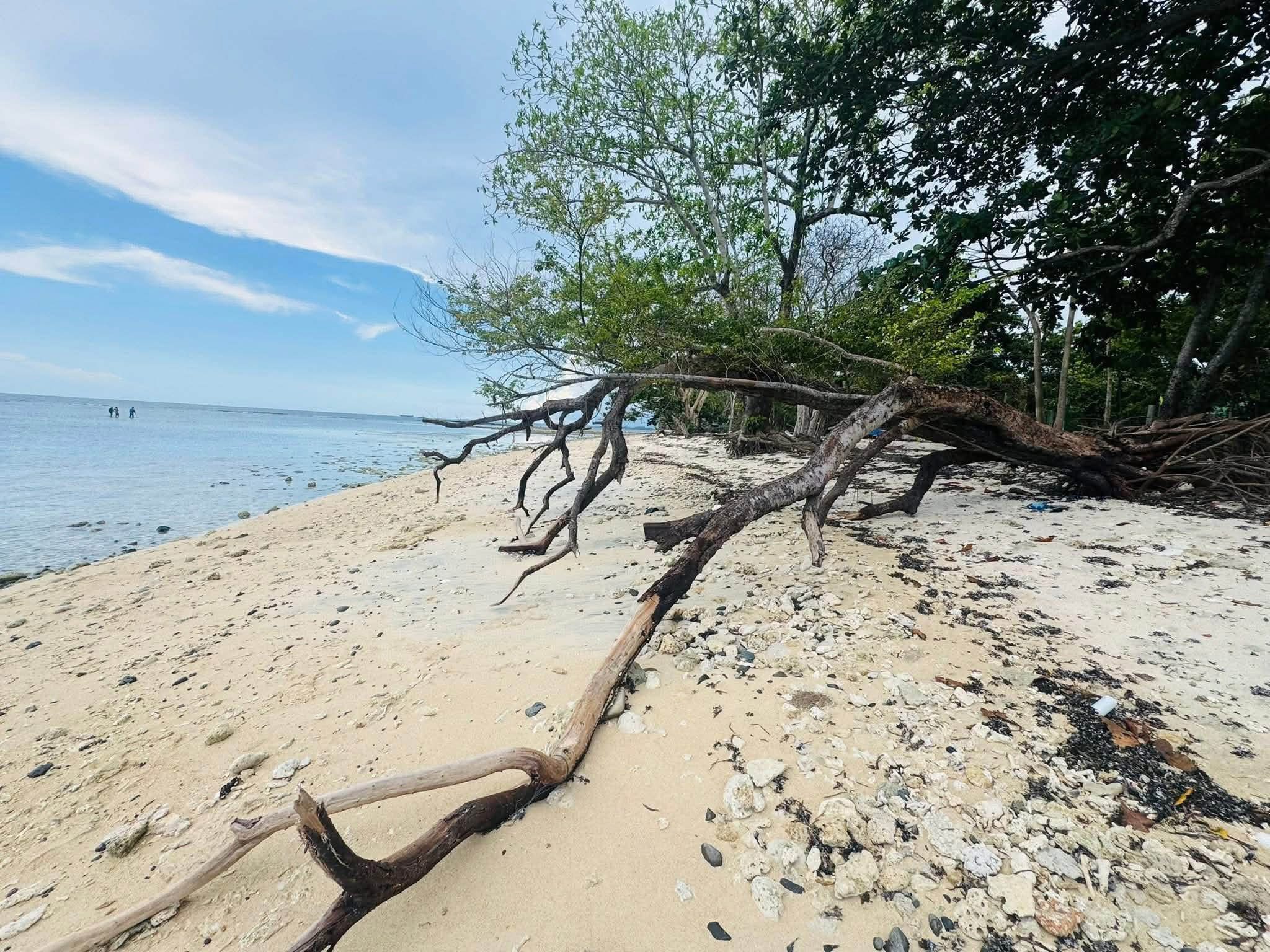
A travel listing can reduce San Salvador to water and sand in one sentence. The documentary record refuses that shortcut. The island appears by name in a 1649 account, became a case study in fisheries co-management, and sits inside a nationally protected seascape.
It is in the seventeenth-century record
A Spanish account of a raid on this coast in 1649 describes an attacking force being driven back by defenders under Fray Francisco de San Jose, and withdrawing to an adjacent islet the account names as Pulo San Salvador. The following day the defenders attacked the hideout and captured the raiders' caracoas and war material. Whatever else is uncertain about that episode, the island is in the document, by name, in the middle of a fight.
That is a rare thing for a small island barangay: a named appearance in a colonial-era narrative, attached to a specific event rather than to a general description of the coast.
And it is in the environmental record
San Salvador sits inside what is now the Masinloc and Oyon Bay Protected Landscape and Seascape. Research and programme records describe community-based marine management around the island from the late 1980s onward, before the 1993 proclamation created the wider marine reserve. The national designation therefore followed an existing local effort rather than introducing conservation to an empty map.
The Galing Pook record gives one early result a number: fish counted per 500 square metres rose from 311 to 402 after a year, a 29 percent increase. One measurement does not prove permanent success, but it shows why the project became a national reference rather than only a local story.
The protection did not arrive from Manila and find an empty island. It arrived and found people already doing the work.
That order of events matters, and it is usually told backwards. A protected area imposed on a community and a protected area that grew out of one are different institutions with different chances of working, whatever the map looks like.
Why “nice beach” is the weakest thing you can say about it
There are a great many nice beaches on this coast and in this country. There are very few small islands that appear by name in a 1649 account of a sea raid, sit inside the only legislated marine protected area in the region, and carry a locally-originated conservation history that researchers have actually written up. Leading with the sand is choosing the least distinctive thing about the place.
Sources & further reading
- Proclamation No. 231, s. 1993Official Gazette of the Republic of the Philippines
- Marine protected area in Zambales earns national recognitionPhilippine Information Agency
- Marine Conservation Project for San Salvador IslandGaling Pook Foundation
- San Salvador fisheries co-management case studyWorldFish digital archive