
Festivals and traditions
Binabayani: Kristiyano and Aeta
Binabayani has two represented sides: Kristiyano and Aeta. Christian Masinloqueños belong to the Kristiyano side; they are not a separate third group.
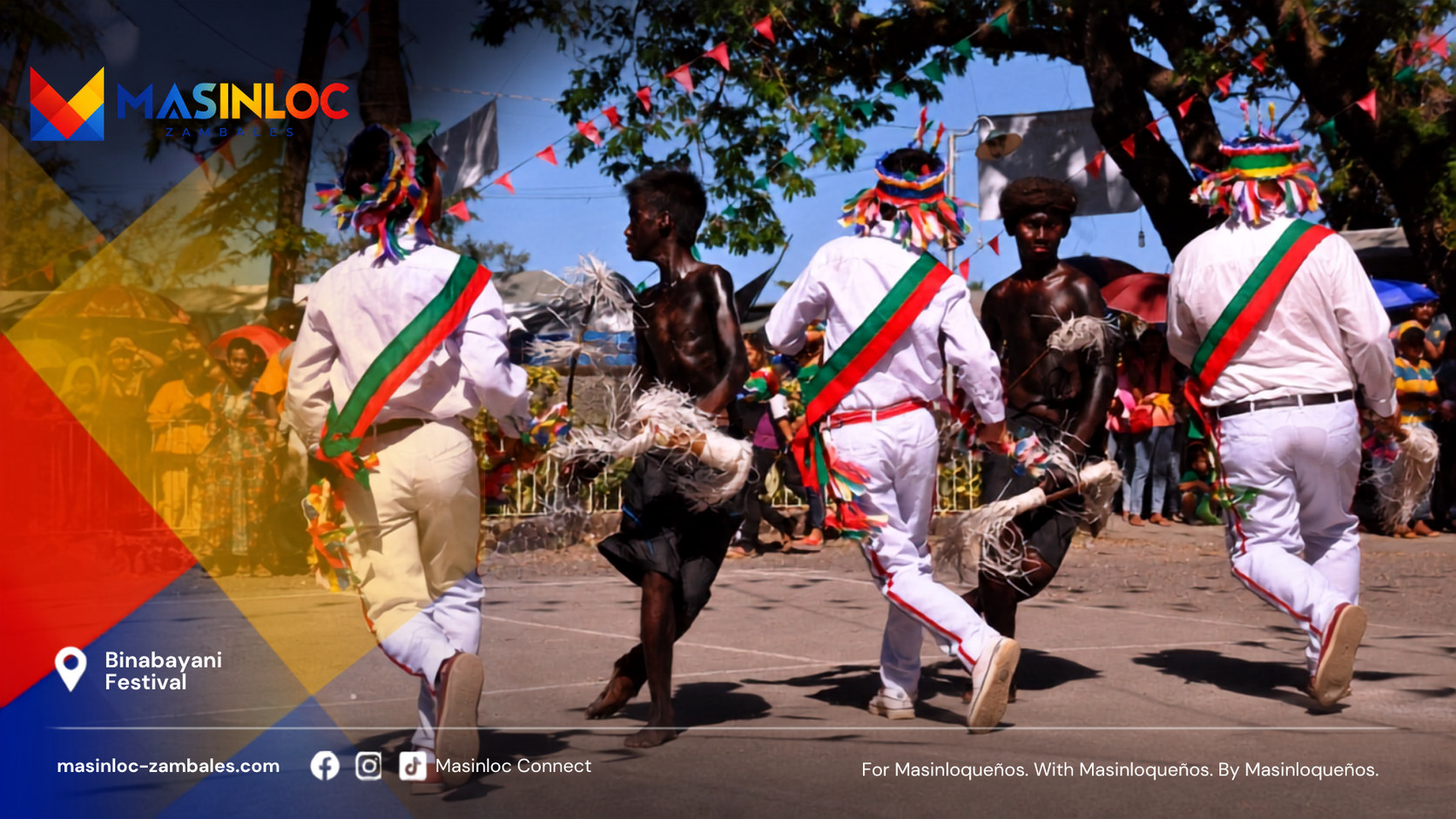
The Department of Tourism recognizes Binabayani as Masinloc's conflict portrayal held with the feast of San Andres on 30 November. In the town's own wording, the represented sides are Kristiyano and Aeta.
The Kristiyano side includes Christian Masinloqueños. Masinloqueños should not be listed as a third side separate from the Kristiyano, and the Kristiyano role should not be rewritten as if it represented only Spaniards.
Two sides, one Masinloc tradition
The performance combines staged confrontation, devotion to San Andres, community memory, music, costume, and public ritual. It remains a living expression of Masinloc even when its earliest historical details cannot yet be fixed to a date.
That clarity also respects Aeta identity. The Aeta side represents a living people with descendants and history, not simply a visual category inside a festival costume.
Binabayani represents Kristiyano and Aeta. Christian Masinloqueños are included in the Kristiyano side.
The origin date remains open
Many modern accounts assign the festival an origin in 1621 and connect it with an Elicano account or a story about an image or bell from the sea. No located seventeenth-century primary source yet establishes that year, the first performance, or the earliest version of the story.
This uncertainty does not weaken the festival. It simply separates what can be observed and publicly documented today from the deeper origin account that remains part of oral tradition and continuing research.
Sources & further reading
- Binabayani FestivalDepartment of Tourism — Love the Philippines
- What Binabayani remembers, and what the record can confirmMasinloc Bulletin