
Food and local flavors
Why Suman and Mango Share a Plate in Masinloc
Masinloc publicly celebrates the pairing, but the town's own suman method remains undocumented. One familiar plate reveals both a living food culture and a gap in its record.
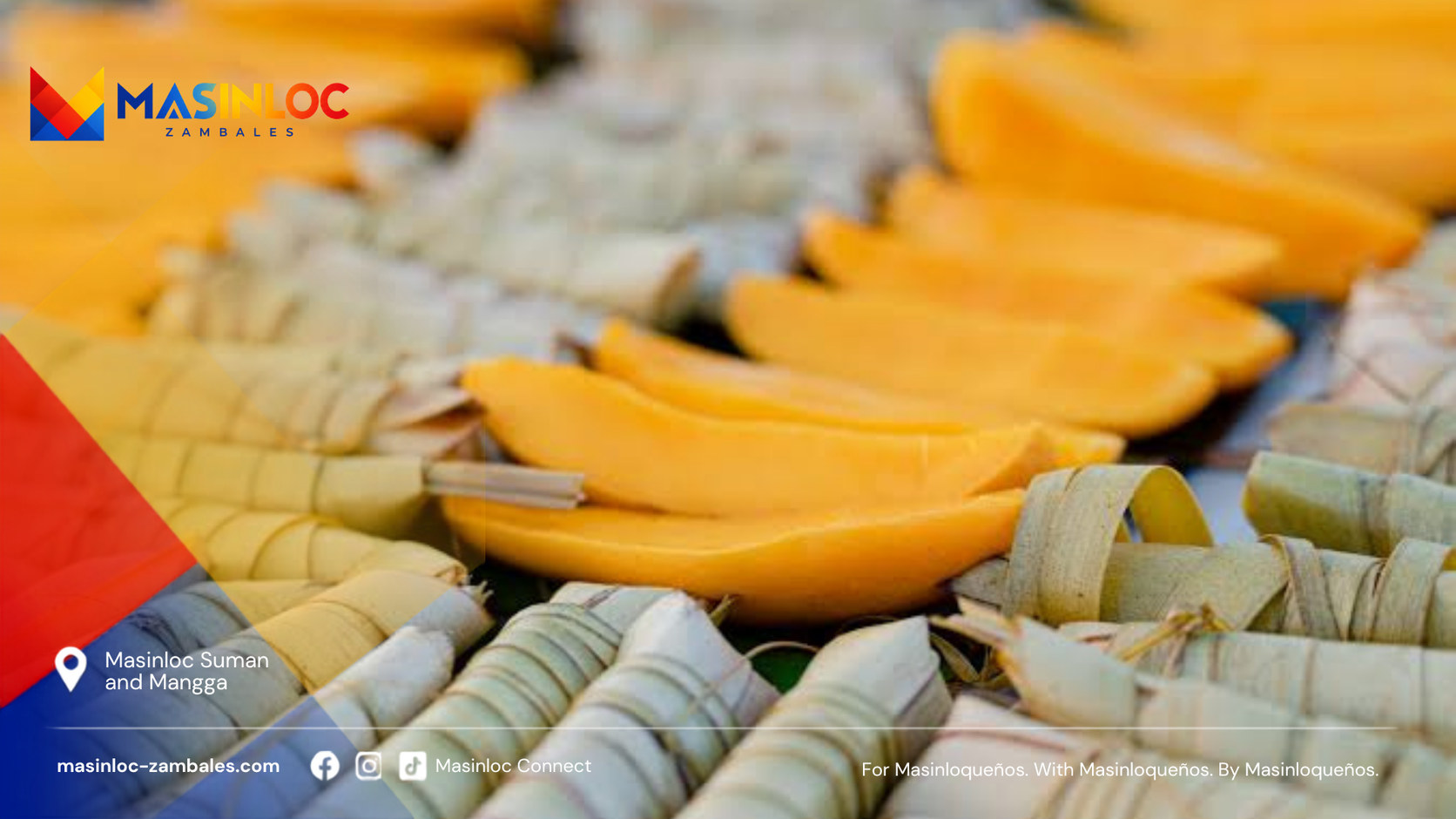
At Masinloc's 2026 civic town fiesta, mango and suman shared the name of a public boodle fight. A photograph supplied to this project shows the same pairing at its simplest: leaf-wrapped rice beside ripe yellow fruit. The combination is familiar enough to celebrate and ordinary enough that its local method has barely been written down.
What the plate can prove
Suman is a broad Philippine family of wrapped rice preparations, not a single national recipe. Rice, wrapping leaf, shape, cooking method and sweetness vary by place and maker. Mango beside suman is also found beyond Zambales, so this page does not claim Masinloc invented the combination.
What can be said specifically is narrower and stronger: the town has placed mango and suman together in a documented public celebration; the image here was supplied as Masinloc suman and mangga; and Masinloc belongs to a province with a serious mango-growing record. The plate is local practice without needing to be a claim of exclusive origin.
The documented mango half
Zambales's mango reputation includes a 1995 Guinness citation associated with Sweet Elena. Separately, a 2013 report quoted a Department of Agriculture official saying mangoes grown in Masinloc measured 23 percent total soluble sugar. That later measurement gives the Masinloc half of the plate a defensible fact without pretending it resolves the older record claim.
The pairing is documented. The recipe is not—yet.
The missing suman half
This project has not established which leaf Masinloc makers prefer, how the bundles are tied, whether coconut milk or sweetener is used, or whether a Sambal name distinguishes the local preparation. Those details cannot be inferred from a photograph or borrowed from a recipe in another province. They require attributed knowledge from the people who make it here.
Sources & further reading
- Local mango takes center stage in Masinloc fiestaHeadline Zambales
- Zambales mango remains sweetest, says DA officialPhilippine Daily Inquirer